Khan Sarayi
The jewel of Sheki
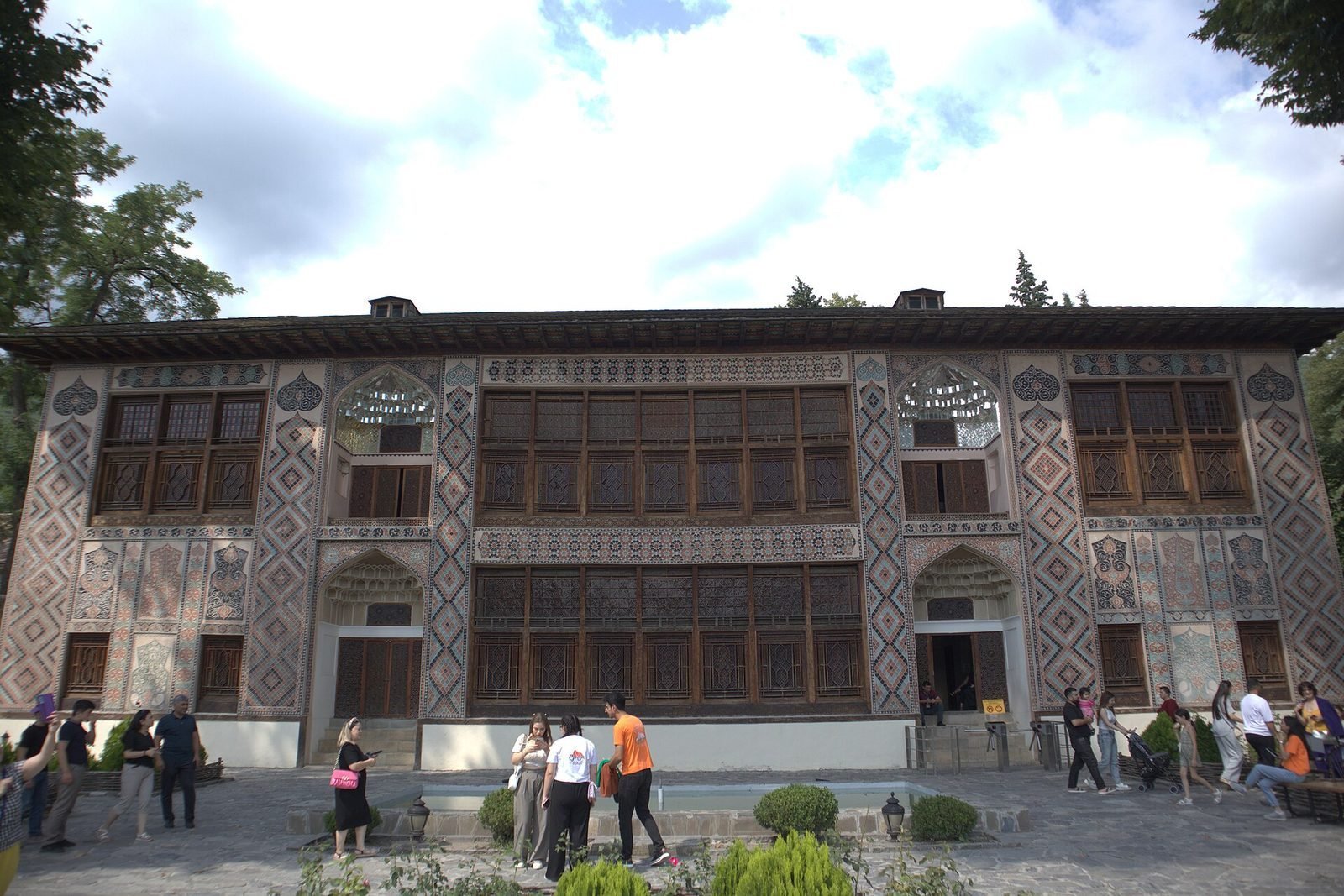
The Palace of Sheki Khans was built in 1797 as a summer residence for the rulers of the Sheki Khanate. It is a relatively small two-storey building, yet every inch of it is covered with art.
The facade is adorned with paintings and mirror niches, and the main windows are huge shebeke. Inside, the walls are painted with flowers, birds and scenes of hunting and battle.
The palace was built without drawings, from the memory and mastery of its craftsmen, and still amazes visitors. In 2019 it was inscribed on the UNESCO World Heritage List.
Facade
The front wall of the palace is entirely covered with paintings, ornaments and two huge full-height shebeke windows.
Shebeke
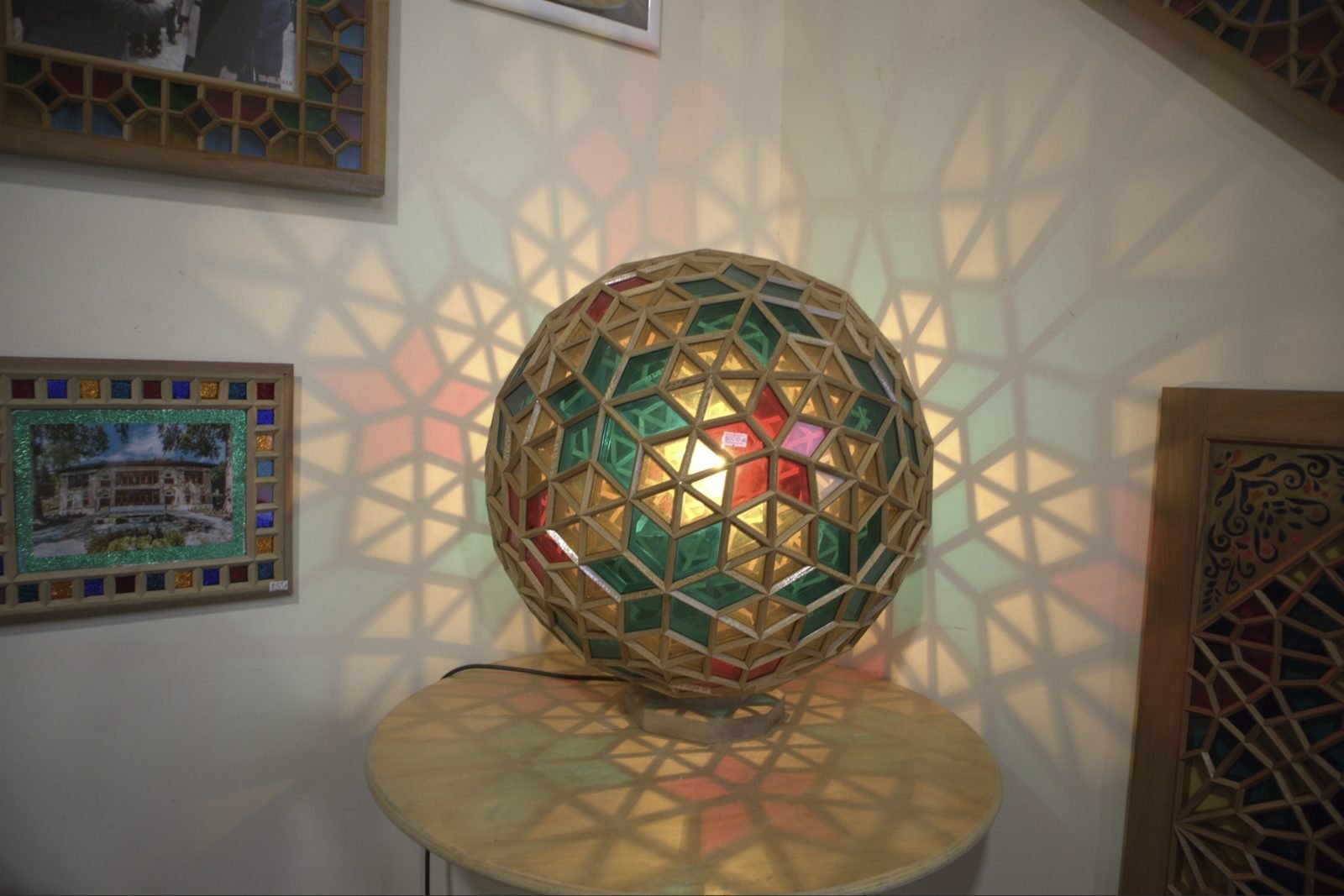
Stained glass of wooden lattice and coloured Venetian glass, assembled without nails or glue — the palace's chief pride.
Frescoes
Walls and ceilings are painted with flowers, pomegranates, birds, hunting scenes and battle subjects in several layers.
The halls
The state halls of the upper floor were meant for receptions; light through the shebeke coloured them in precious tones.
Garden and plane trees
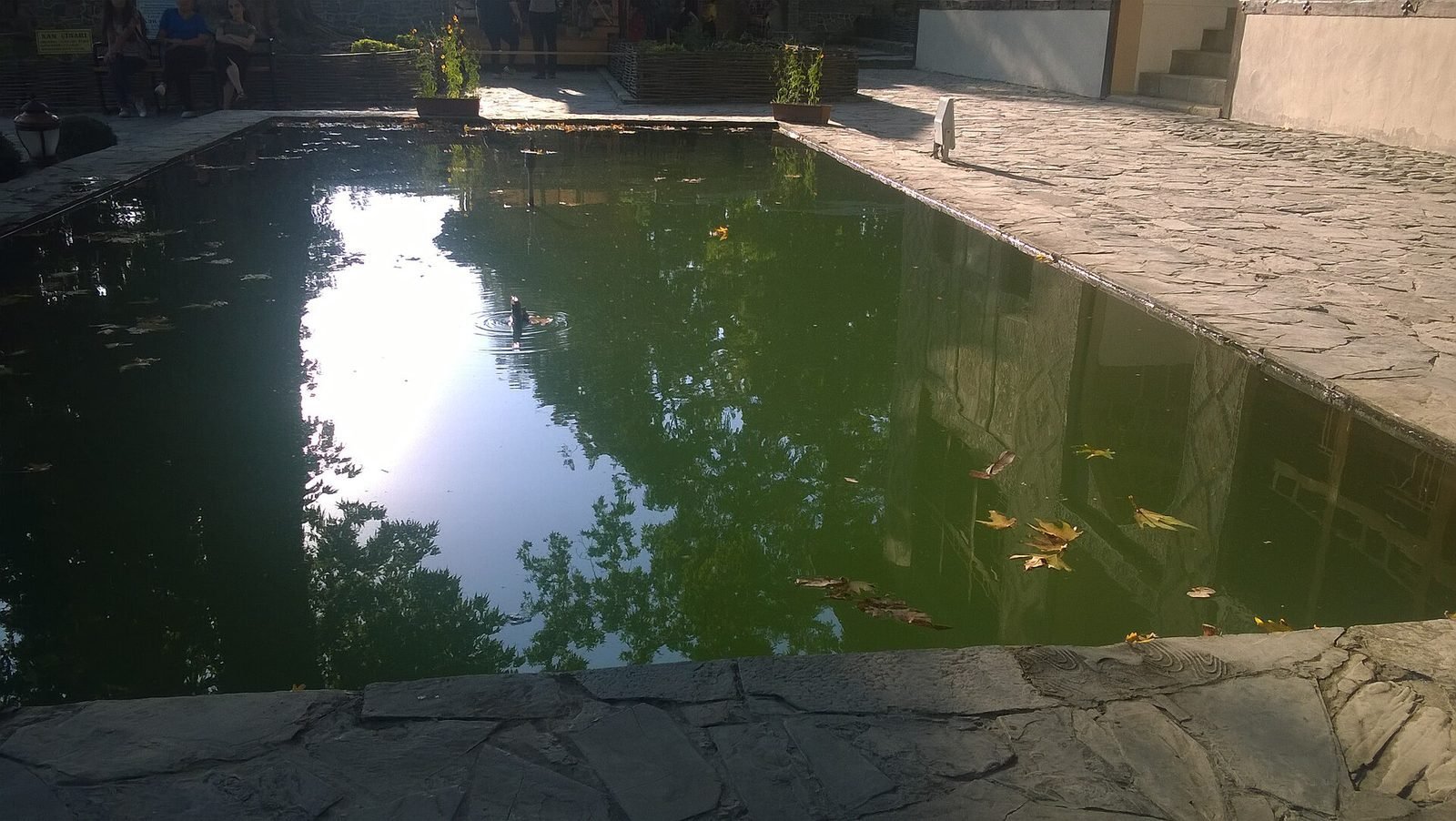
The palace stands in a garden with old plane trees (chinars) and a pool that reflects the painted facade.
UNESCO heritage
Since 2019 the palace has been part of the World Heritage site “Historic Centre of Sheki with the Khan's Palace”.
 Shebeke
Light and glass
A window of thousands of panes
Shebeke are assembled by hand from many small wooden strips and pieces of coloured glass. The parts hold one another without nails or glue — like a giant wooden puzzle.
A single square metre of such a window can take several thousand elements. When the sun passes through it, the room fills with coloured light.
 Garden
Around the palace
Garden, plane trees and water
The palace is surrounded by a garden with centuries-old plane trees and a mirror-like pool. On a hot day it is cool here, and the water reflects the painted facade.
Other buildings of the khan's court survive nearby, forming a palace complex.